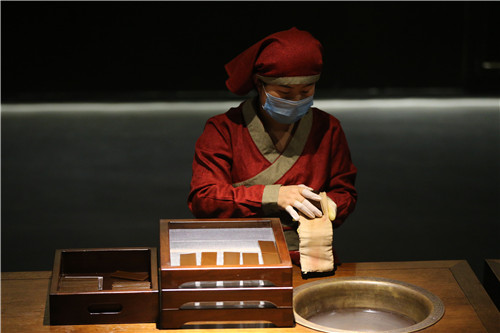
Dong'e Ejiao Production Technique
Introduction
Dong'e Ejiao, a highly regarded traditional Chinese medicine, is produced using a meticulous and historically rich technique. Known for its therapeutic properties, Dong'e Ejiao is primarily used as a tonic for various health issues. Dong'e Ejiao production technique was inscribed on the National Intangible Cultural Heritage List of China in 2008.
History
The history of Dong'e Ejiao dates back to ancient China, where it was originally developed as part of the rich tradition of Chinese herbal medicine. The technique has evolved over thousands of years, with its earliest references found in classical Chinese medical texts. Dong'e Ejiao was traditionally prescribed for women to address menstrual disorders and to aid in postpartum recovery. Over the centuries, the production techniques have been refined, ensuring the quality and effectiveness of the remedy. The Shandong region, particularly the town of Dong'e, has been the epicenter of Ejiao production due to its unique geographical and climatic conditions that contribute to the quality of the final product. The historical significance of Dong'e Ejiao is not only in its therapeutic use but also in its contribution to the cultural and economic development of the region. As the demand for traditional Chinese medicine grows globally, the historical craftsmanship of Dong'e Ejiao continues to be celebrated and preserved.
Production Techniques
Selection of Ingredients
The foundation of Dong'e Ejiao's production lies in the careful selection of ingredients. The primary ingredient, donkey skin, is sourced from specific breeds known for their quality. The selection process is stringent to ensure that only the best materials are used, contributing to the efficacy of the final product. The skins undergo thorough cleaning and preparation before being used in the production process. This meticulous selection is crucial as the quality of the donkey skin directly affects the potency and effectiveness of the Ejiao.
Stewing Process
The stewing process is a critical stage in the production of Dong'e Ejiao. The cleaned donkey skins are boiled in water for an extended period to extract the gelatin. This process requires precision and skill to maintain the right temperature and duration, ensuring the gelatin extracted is of the highest quality. The stewing not only extracts the useful components but also eliminates impurities. The method has been perfected over centuries, maintaining the traditional techniques that have been handed down through generations.
Solidification and Shaping
Once the gelatin is extracted, it undergoes a solidification process. This involves cooling the liquid gelatin to allow it to solidify. The resulting solid is then shaped into blocks or other forms suitable for packaging and consumption. This stage requires careful monitoring to achieve the desired consistency and texture. The solidification and shaping process is an art that requires experience and expertise to ensure the high quality and uniformity of the product.
Drying and Packaging
The final stages of production involve drying the solidified Ejiao to remove excess moisture, enhancing its shelf life and stability. The drying process must be controlled to prevent any loss of efficacy or quality. After drying, the Ejiao is packaged using methods that preserve its medicinal properties and ensure its integrity during transportation and storage. The packaging is designed to protect the Ejiao from environmental factors and to maintain its quality until it reaches the consumer.
Cultural Significance
Ejiao is renowned in traditional Chinese medicine (TCM) for its blood-enriching, anti-aging, and health-boosting properties. It is commonly used in tonics and traditional remedies for anemia, fatigue, and post-illness recovery. The craftsmanship involved in its production embodies the cultural essence of TCM, combining philosophy, literature, and science.
Dong'e Ejiao has received numerous accolades, including a gold medal at the Panama-Pacific International Exposition and recognition as a "Chinese Time-Honored Brand". The art of its production has been preserved as a symbol of China's cultural heritage.








